

All radiology departments across medical facilities are equipped with dedicated **X-ray exposure hand switches**, which serve as the core control component for initiating X-ray exposure of diagnostic radiography machines. Correct and standardized operation of the exposure hand switch is of great importance, as it not only effectively extends the overall service lifespan of medical X-ray equipment, but also fundamentally guarantees radiation safety for radiographers, patients and surrounding personnel. In the global medical imaging industry, exposure hand switches are classified into three mainstream structural types: 1-step, 2-step, and 3-step exposure switches. Single 1-step exposure switches are specially designed and mainly applied to compact dental X-ray machines, for intraoral dental radiography scenarios. Among all series, the **2-step exposure hand switch** is the most universally used model in the market, with full compatibility with almost all conventional analog and digital medical X-ray machines,https://www.iec.ch mobile X-ray units, and radiography systems. The upgraded 3-step exposure switch integrates an extra independent function module, which can realize synchronous control of X-ray exposure and automatic adjustment of the X-ray collimator, satisfying customized operation demands of large-size radiography equipment. ### Why 2-step exposure switches become the mainstream choice in medical radiology The fundamental core behind the widespread adoption of 2-step exposure switches lies in rigorous radiation protection and operational safety precaution. As we all know, X-rays are a form of ionizing radiation. Long-term or unintended excessive X-ray exposure will cause irreversible damage to human cells and bodily health. Therefore, the exposure hand switch, as the only terminal device controlling X-ray emission, acts as the first and most critical safety barrier for radiation protection in daily radiological examinations. If the exposure system only adopts a single-stage one-touch button design, the equipment is extremely vulnerable to accidental mis-touch triggering. Unplanned accidental exposure will generate unnecessary X-ray radiation, bringing avoidable radiation hazards to operators and the surrounding environment. In contrast, the two-stage press mechanism is fully designed in accordance with human neuromuscular response and conscious decision-making logic. When the operator presses the first stage of the switch, this movement is mostly an instinctive physical reflex, without deep conscious judgment from the brain. Only when the operator deliberately applies continuous force to press and lock the second stage will the X-ray exposure command be officially activated. This second-step triggering is a complete conscious instruction completed by brain cognitive judgment, which completely eliminates misoperation caused by body reflex. To sum up, the dual-stage design of exposure hand switches is an inherent safety mechanism for radiological operation. It greatly reduces the probability of accidental X-ray emission, cuts down redundant radiation output, and complies with international IEC radiation safety standards for medical X-ray equipment. With stable performance, high compatibility and perfect safety protection, 2-step exposure switches have become the standard matching accessory for global medical X-ray imaging devices.https://www.xrayswitch.com/blog
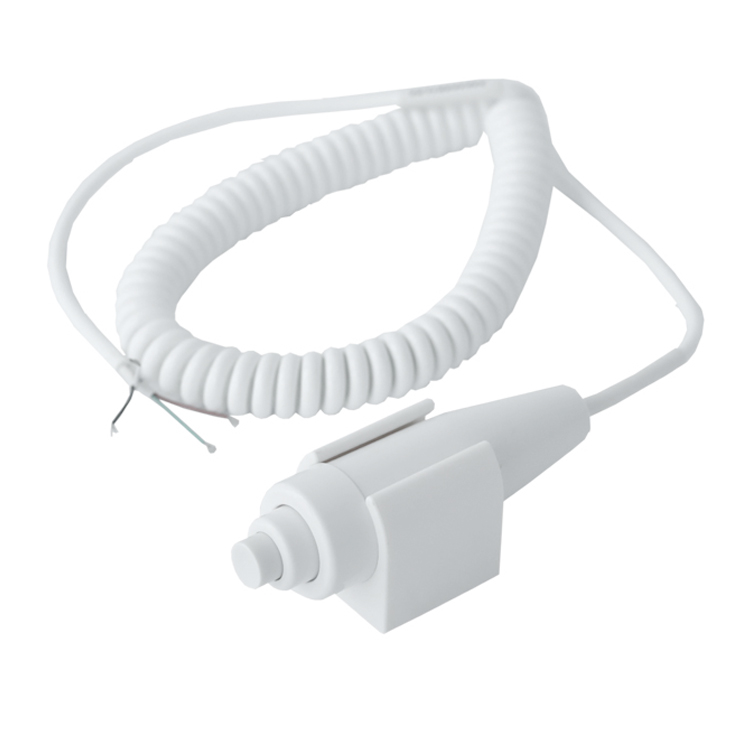
All our X-ray exposure hand switches fully comply with the IEC international safety standards for medical radiological equipment and ACR clinical operation specifications.

 WhatsApp
 YouTube
 Instagram
 LinkedIn
 Facebook